

 THE BLACK HOUSE Governance · ontology · mission root |
 KRAKEN JUTSU Provenance-first judgment · defensive orchestration |
 ZYRA Bounded agentic execution |
 GPT-DOUG-LLM-MAX Hybrid collective intelligence · people + agents + evidence |
 A.E.O. // RVIA-INTEL All Eyes Open · provenance-first intelligence accountability |
Click an insignia to open its canonical code home. These are project insignias, not government credentials or endorsements.

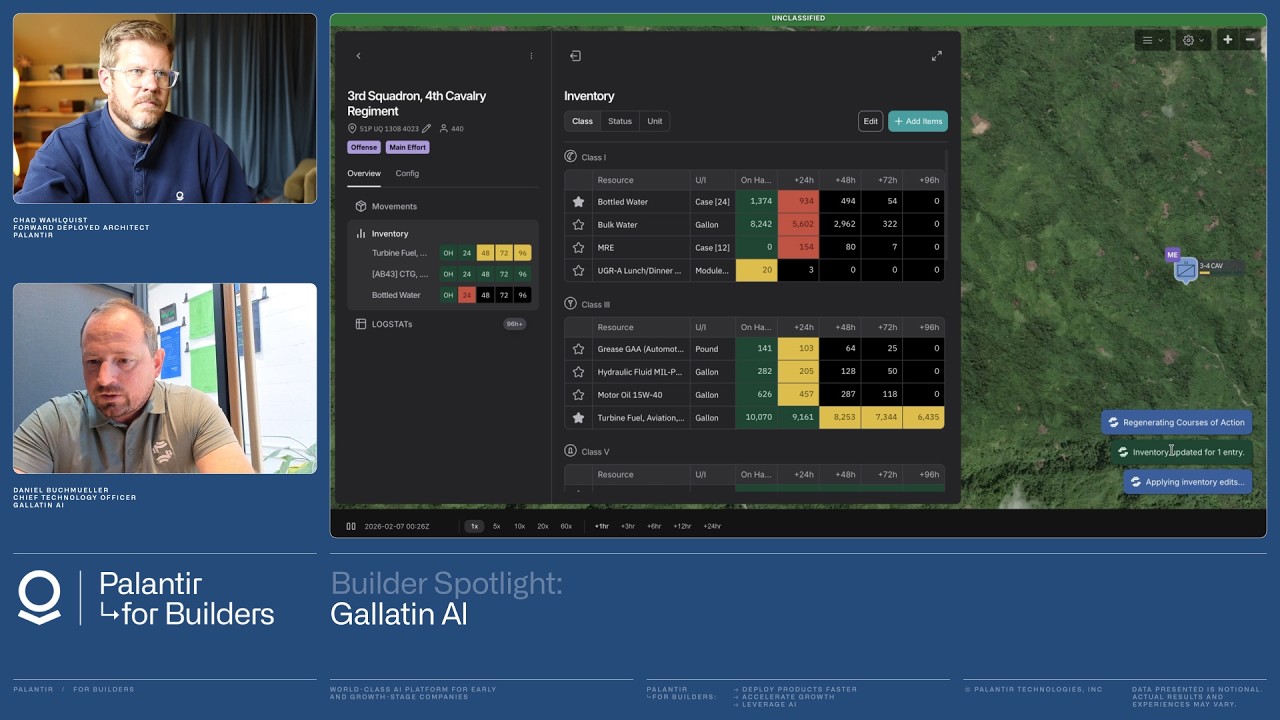
▶ PUBLIC RESILIENCE REFERENCE — human-controlled forecasting, course-of-action generation, simulation, and approval-gated execution

▶ PUBLIC RESILIENCE REFERENCE II — additional external architecture and infrastructure-protection reference


Neptune Shield and the linked public reference materials are external sources. Their inclusion does not imply affiliation, endorsement, contract status, clearance, authorization, or third-party access.
Build with AI. Keep execution visible. Keep authority explicit.


Ecosystem · Vibe-code loop · Security · Products · Architecture · Palantir · Quick Start · Docs
GPT-DOUG-LLM MAX is the orchestration layer. Wakeup3lm is the IDE-native LLM execution kernel. The Ontology gives the system typed operational context. ZYRA provides bounded agentic execution. SHADOW GLASS / GLASS ONION provide policy, provenance, and defensive controls. Authorized Palantir AIP / Foundry connections can supply model, Logic, and Ontology context while the external tenant remains authoritative.
The execution contract is deliberately simple:
AI proposes → Ontology grounds → policy bounds → approved tools execute → tests and probes produce proof → humans retain control of material actions.
This repository is designed to make that entire path visible instead of hiding execution behind a chat response.
The Quantum Warfighter Ontology — canonical public project specification (v1.0.0) defines the research-only design for synthetic operational support, defensive-system exercises, mathematical verification, and separately human-reviewed ontology findings. Read the full 19-section architecture.
Publication status: adopted design, not yet implemented as a complete subsystem, not an operational readiness source, military authorization, endorsement, or scientific proof. The existing ZYRA_MSS_V1 ontology remains unchanged and authoritative for its own existing software contract.

| Layer | Beginner translation | What it owns |
|---|---|---|
| GPT-DOUG-LLM MAX | The coordinator | Breaks the goal into a governed engineering mission |
| Wakeup3lm | The coding brain inside the IDE | Structured decisions, file/tool operations, repair loops, audit state |
| Ontology | The system's shared map of reality | Projects, files, decisions, tool calls, builds, previews, checkpoints, deployments |
| Palantir AIP / Foundry | Optional authorized enterprise intelligence plane | Model proxy, published Logic/functions, Foundry Ontology objects/actions |
| Agent + tools | The hands | Read/edit files, run commands, build, test, inspect, validate |
| Security gates | The guard rails around execution | Least privilege, approval gates, fail-closed checks, CI, compliance mappings |
| Evidence | Proof that the change works | Tests, logs, previews, probes, audit records |
| Ship | Controlled release | Checkpoint, deployment adapter, rollback path |
The important idea: the model never becomes authority simply because it generated an answer. State is grounded, actions are explicit, and results have to survive verification.

For a beginner, one prompt such as “build me a responsive mobile web app” becomes this engineering loop:
ASK
 ↓
PLAN
 ↓
GROUND IN ONTOLOGY / AUTHORIZED CONTEXT
 ↓
EDIT + RUN + BUILD
 ↓
TEST + SECURITY + PREVIEW
 ↓
PASS? ── yes ──→ CHECKPOINT → SHIP
  │
  no
  ↓
DIAGNOSE → REPAIR → VERIFY AGAIN
Wakeup3lm records structured AgentDecision and ToolCall state so malformed model output becomes a governed failure that can be repaired instead of crashing the IDE.
Deep dive: Wakeup3lm README · Wakeup3lm Ontology · Palantir Full Stack

The infographic is generated from the repository itself. scripts/generate_ecosystem_diagrams.py scans the live codebase, Ontology, tests, and .github/workflows/ definitions. The Ecosystem README Refresh workflow regenerates the SVGs after repository changes, so the diagrams are not intended to become a manually maintained architecture snapshot.
A green GitHub badge means the corresponding workflow passed its latest applicable run. The diagram itself means the gate is configured; it does not fabricate a passing result.
Security design rules:
- least privilege and explicit capability boundaries;
- path and host boundary enforcement;
- writes disabled or human-gated where consequences are material;
- malformed or unknown agent actions fail closed;
- tests, audits, and probes are evidence, not decoration;
- no repository setting can manufacture external Palantir entitlement or government authorization.
The Black House resilience policy turns public logistics/decision-workflow lessons into a defensive software-infrastructure contract: telemetry first, configurable thresholds, forecast confidence, dry-run/simulation before material mutation, snapshots, rollback, least privilege, explicit human override, and default-disabled autonomous external dispatch.
- Infrastructure resilience policy
- Deterministic validator
- CI resilience gate
- Public reference video I
- Public reference video II
Read SECURITY.md, Federal / IC alignment, and Palantir Full Stack.


SHADOW GLASS shields GLASS ONION. GLASS ONION makes authority observable.
PUBLIC / AUTHORIZED SOURCES
            ↓
      SHADOW GLASS
 identity • provenance • confidence • policy
            ↓
       GLASS ONION
 intent • context • execution • evidence
            ↓
  PALANTIR-STYLE ONTOLOGY
            ↓
     THE BLACK HOUSE
            ↓
GPT-DOUG-MAX → WAKEUP3LM → ZYRA / XUNIA
Public U.S. Space Force mission concepts, NSA defensive cybersecurity guidance, NASA public mission data/software, NIST controls, and public IC directives can be mapped into the project's provenance-first control model. These are independent software mappings, not agency credentials or endorsements.
Open SHADOW GLASS → · Machine-readable ontology →
The beginner education module inside GPT-Doug, ZYRA, and XUNIA.
Learning page · Source and launch guide.
Run bash scripts/doug-max nedu or type /nedu in ZYRA chat.
The browser page becomes available after the Pages deployment containing this module.
| Product | What it does | Best fit | Readiness |
|---|---|---|---|
| Wakeup3lm | Ontology-first IDE LLM kernel with structured agent decisions, secure workspace tools, persistence, and audit state | AI-native browser IDE / vibe coding | Implemented kernel |
| ZYRA Core | Bounded agentic software-engineering runtime with planning, repository edits, checkpoints, validation, rollback, self-heal, and defensive policy controls | Developers and technical teams building agentic workflows | Implemented runtime |
| GPT-DOUG ↔ Palantir Full Stack | Foundry Ontology, AIP proxy/Logic, eval runner, Automate effects, Gotham adapter, Apollo adapter, and tenant probes | Authorized Palantir deployments | Integration-ready |
| NXYZ Mouse Mic | Voice/keyboard browser guidance that finds, highlights, and activates visible Foundry controls with high-impact confirmation | Accessibility, operator assistance, dense enterprise UI navigation | v1.0.2 shipping candidate |
| Watch Dog | Local dog detection + temporal scoring + alerting for suspected bathroom events | Edge-AI / smart-camera experimentation | Experimental prototype |
Full portfolio: docs/PRODUCTS.md
Most AI tooling optimizes for generating an answer. This ecosystem focuses on the harder step: turning a model recommendation into a controlled operation with evidence.
| Value | Approach |
|---|---|
| Execution control | Deterministic policy and allowlisted tools sit between model output and mutation |
| Recoverability | Checkpoint before mission-owned writes; rollback when final validation fails |
| Operational evidence | Tests, logs, previews, reports, and runtime state are treated as proof |
| Ontology grounding | Operational nouns become typed objects and governed verbs become explicit actions/tool calls |
| Enterprise context | Foundry integration retrieves only context exposed to the configured authorized identity |
| Local-first options | Provider-neutral runtime paths reduce dependence on one hosted model vendor |
| Human authority | Material external writes remain gated rather than silently delegated to the model |
flowchart TD
    U[User / Developer] --> D[GPT-DOUG-LLM MAX]
    D --> W[Wakeup3lm IDE LLM]
    W --> O[Ontology Control Plane]
    O --> P[Policy + Capability Boundary]
    O --> AIP[Authorized Palantir AIP / Foundry]
    P --> R[Agent Runtime + Allowlisted Tools]
    R --> F[Files / Terminal / Build / Preview]
    F --> V[Tests + Security Gates + Evidence]
    V -->|pass| C[Checkpoint]
    V -->|fail| W
    C --> DEP[Approved Deployment]
    AIP --> O
Design rule: reasoning is flexible; execution authority is explicit; evidence determines whether the result survives.
Deep dive: docs/ARCHITECTURE.md · docs/AGENTIC_RUNTIME.md
The repository contains software adapters for an authorized Palantir enrollment.
Implemented code planes include:
- Foundry OAuth/bearer configuration and exact-host HTTPS transport boundaries;
- Ontology listing, object types, object reads/searches, Query/Logic execution, and gated Actions;
- AIP provider-compatible model proxy invocation;
- published AIP Logic/function invocation;
- external regression eval runner against published Logic targets;
- Automate-compatible Action / Logic effect bridge;
- Gotham REST adapter;
- Apollo GraphQL adapter and explicitly approved Product Release publishing path;
- live tenant/resource probes;
- Wakeup3lm audit recording around external AIP/Logic operations.
/palantir stack
/palantir probe
/palantir probe-model
/palantir query-types <ontology>
/palantir aip-logic <ontology> <query_api_name> <parameters_json>
/palantir aip-chat <model_rid> <prompt>
The repository does not manufacture credentials, licenses, tenant permissions, ATOs, clearances, or agency affiliation. External authorization remains authoritative.
Integration guides: Palantir Foundry · Palantir Full Stack
git clone https://github.com/sonoxo/gpt-doug-llm.git
cd gpt-doug-llm
python3 dougctl.py heal
python3 zyra_chat.py
Verify the native runtime:
/status
/agent-test
/laser-test
Typical mission:
/plan add structured mission telemetry
/do add structured mission telemetry
/mission-status
Mission lifecycle:
OBSERVE → PLAN → GROUND → EDIT → TEST → REVIEW → KEEP / REPAIR / ROLLBACK
Full command reference: docs/COMMANDS.md
Verify the installed GPT-DOUG module framework without running agents or using paid APIs:
python3 -m venv .venv
.venv/bin/python -m pip install -e .
.venv/bin/gpt-doug-health --strict
# Optional local Ollama status: .venv/bin/gpt-doug-health --ollama
Integrated MAX shortcuts: .venv/bin/gpt-doug skull live starts the
interactive 3D terminal, .venv/bin/gpt-doug skull bench --iterations 1
measures real local inference latency, and .venv/bin/gpt-doug health --verify-skull runs the offline 3D health check. See
GPT-DOUG MAX Integration.
See Framework Health & CI Upgrade for test coverage, the model dependency fix, and the distinction between importable modules and verified live operation.
Built-in boundaries include repository-scoped agent tools, mission budgets, checkpoint-before-write behavior, validation gates, rollback, defensive circuit breakers, explicit Foundry write enablement, human confirmation for configured material actions, secret-aware configuration, and rejection of unrestricted external offensive behavior.
Read SECURITY.md and docs/SECURE_DEVELOPMENT_BASELINE.md.
| Label | Meaning |
|---|---|
| Implemented kernel/runtime | Code exists and is covered by its repository test/CI contract |
| Shipping candidate | Product package/specs exist and are being prepared for external distribution |
| Integration-ready | Connector/runtime exists but requires external tenant authorization/configuration |
| Experimental prototype | R&D code; not represented as production-grade assurance |
| Planned | Architecture or roadmap item; do not treat it as currently deployed |
A code-side ✅ and a live-tenant ✅ are deliberately different concepts.
gpt-doug-llm/
├── wakeup3lm/                   # IDE LLM + local Ontology kernel
├── zyra_chat.py                 # Interactive ZYRA runtime
├── zyra_agent.py                # Bounded repository Agent Core
├── zyra_laser.py                # Defensive circuit breaker
├── palantir_foundry.py          # Hardened Foundry REST client
├── palantir_stack.py            # Palantir capability/control registry
├── federal_compliance.py        # Public federal/IC alignment gate
├── agents/                      # Planner / executor / reviewer components
├── workers/                     # Worker and orchestration services
├── tools/nxyz-mouse-mic/        # Browser-guidance product
├── safety-shield/               # SHADOW GLASS + GLASS ONION control plane
├── scripts/generate_ecosystem_diagrams.py
├── scripts/validate_infrastructure_resilience.py
├── docs/assets/                 # Auto-generated responsive SVG infographics
├── tests/                       # Regression tests
└── .github/workflows/           # CI / security / release / adaptive-doc automation
| Start here | Purpose |
|---|---|
| Wakeup3lm | IDE-LLM kernel and Ontology-first execution model |
| Palantir Full Stack | AIP, Logic, Foundry, Gotham, Apollo and tenant verification |
| Federal / IC Alignment | Public control alignment and explicit authorization boundaries |
| SHADOW GLASS | Defensive mission nexus and Glass Onion shield |
| Infrastructure Resilience | Human-governed infrastructure protection contract |
| Product Portfolio | Products, buyer value, and readiness |
| Architecture | Runtime layers and trust boundaries |
| Agentic Runtime | Mission budgets, tools, checkpointing, rollback |
| OPERATIONDINNER | Pinned Black House graph of verified public DoD-source fork lineage |
| LLMs-at-DoD Ontology | Cell-level, source-grounded public tutorial ontology |
| NRL Repository Ecosystem | Complete pinned public NRL catalog and metadata ontology |
| Commands | Terminal command reference |
| Security | Security limitations and vulnerability reporting |
| Contributing | Development workflow |
ZYRA, GPT-DOUG-LLM, Wakeup3lm, NXYZ, SHADOW GLASS, GLASS ONION, The Black House, and repository-issued RVIA materials are independent software/project artifacts. References to Palantir, Neptune Shield, the U.S. Space Force, NSA, NASA, government systems, intelligence/security disciplines, or external organizations describe integrations, public mission/reference mappings, research, interoperability goals, or design context. They do not imply federal-agency status, congressional authority, security clearance, certification, endorsement, contract award, or affiliation.
The GPT-Doug Invention Lab contains
four local research prototypes for evidence-bound admission, dependency-aware
repair planning, offline reconciliation, and citation lineage. Run
bash scripts/doug-max invention-lab demo for the synthetic end-to-end checks.
These are experimental tools, not patentability findings or live execution gates.
GPT-Doug now has a documented local visual foundation and a lazy 100,000,000-address global skill lattice.
ONTOLOGY
   ↓
GENOME / PHENOTYPE
   ↓
EMBODIMENT
   ↓
HUD + MATRIX
   ↓
KNOWLEDGE + SKILLS + RESEARCH
   ↓
MAX CONTROL
   ↓
USER-AUTHORIZED ADMIN
The visual shell is documented separately from the canonical runtime so a HUD failure cannot overwrite the core. The skill lattice exposes exactly 100 × 100 × 100 × 100 = 100,000,000 deterministic workflow addresses across the global economy, AI infrastructure, public-sector operations, defensive intelligence, musicians, artists, developers, research, infrastructure, and the creative economy. It is lazy and compositional: GPT-Doug generates skill descriptors on demand instead of pretending to ship 100 million pretrained expert models or storing 100 million files.
Quick checks:
python3 skills/global_skill_lattice.py count
python3 skills/global_skill_lattice.py show 54217804
python3 skills/global_skill_lattice.py search music release
python3 skills/global_skill_lattice.py search ai-infrastructure reliability
Read: GPT-Doug MAX Foundation · Visual GPT-Doug · Global Skill Lattice
MIT — see LICENSE.