
Chinese version readme.md is in contributting.md.
CAPO-LeggedRobotOdometry is a pure proprioceptive odometry library for legged robots, implemented with a portable C++ estimator core that depends only on IMU and joint motor data.
The core estimation logic is implemented in FusionEstimator/fusion_estimator.h. The file fusion_estimator_node.cpp provides a ROS 2 wrapper around this estimator, while the Matlab/ folder contains examples for MATLAB + C++ mixed compilation and offline evaluation.
For side-by-side comparison, Matlab/Comparison/invariant-ekf/ provides a MATLAB mixed-compilation workflow for invariant-ekf, making it easier to compare this repository against a representative open-source legged odometry baseline.
In 3D closed-loop trials (a 200 m horizontal and 15 m vertical loop), Astrall point-foot robot A achieves 0.1638 m horizontal error and 0.219 m vertical error; for wheel-legged robot B, the corresponding errors are 0.2264 m and 0.199 m.
Welcome to add my wechat 401435318 and join a wechat group.
Contact-Anchored Proprioceptive Odometry for Quadruped Robots (arXiv:2602.17393)
If you use this repository in research, please consider citing the paper.
To help readers quickly validate the pipeline, we provide Go2-EDU trial datasets, including real-world videos, derived CSV files, and the corresponding ROS bag topics/messages required by this node, enabling fast reproduction and sanity checks.
- Download (GitHub Releases): https://github.com/ShineMinxing/CAPO-LeggedRobotOdometry/releases/tag/DataForTest
- Recommended assets in that release include
GO2Flat,GO2Stairs,MPXY150Z10,MWXY150Z10,robot_flat_1_compress.zip, androbot_stairs_1_compress.zip
Note: the IMU on this Go2-EDU platform exhibits noticeable yaw drift, so the odometry accuracy is generally worse than the results reported for Astrall robots A and B in the paper.
| Category | Description |
|---|---|
| Biped / Quadruped / Wheel-Legged Unified | Online contact-set switching; stance legs are detected automatically, supporting fast transitions between standing and walking. |
| IMU + Joint-Motor Only | The estimator core works with only IMU and joint motor measurements, without requiring cameras or LiDAR. |
| MATLAB / C++ Mixed Compilation | The Matlab/ folder provides MATLAB + MEX examples for calling the same C++ core, and Matlab/Comparison/invariant-ekf/ includes a comparable mixed-compilation setup for invariant-ekf. |
| Full 3D & Planar 2D | Publishes both 6DoF odometry (SMX/Odom) and a gravity-flattened 2D odometry (SMX/Odom_2D). |
| Portable Pure C++ Core | The estimator core is isolated in FusionEstimator/, making it easier to reuse outside ROS2. |
| Runtime Tuning | Key parameters can be adjusted through config.yaml, and platform-dependent thresholds can be tuned for different robots. |
| Scope | Repository | Summary |
|---|---|---|
| Low-level / Drivers | https://github.com/ShineMinxing/Ros2Go2Base | DDS bridge, Unitree SDK2 control, pointcloud→LaserScan, TF utilities |
| Odometry | CAPO-LeggedRobotOdometry (this repo) | Pure proprioceptive fusion, publishes SMX/Odom / SMX/Odom_2D |
| SLAM / Mapping | https://github.com/ShineMinxing/Ros2SLAM | Integrations for Cartographer 3D, KISS-ICP, FAST-LIO2, Point-LIO |
| Voice / LLM | https://github.com/ShineMinxing/Ros2Chat | Offline ASR + OpenAI Chat + TTS |
| Vision | https://github.com/ShineMinxing/Ros2ImageProcess | Camera pipelines, spot / face / drone detection |
| Gimbal Tracking | https://github.com/ShineMinxing/Ros2AmovG1 | Amov G1 gimbal control and tracking |
| Tools | https://github.com/ShineMinxing/Ros2Tools | Bluetooth IMU, joystick mapping, gimbal loop, data logging |
⚠️ Clone as needed. If you only need state estimation, this repository is sufficient. For mapping, it is natural to pair it withRos2SLAMandRos2Go2Base.
CAPO-LeggedRobotOdometry/
├── CMakeLists.txt
├── package.xml
├── config.yaml
├── fusion_estimator_node.cpp        # ROS2 wrapper around the C++ estimator core
├── FusionEstimator/                 # portable pure C++ estimator core
│   ├── Estimators/
│   ├── fusion_estimator.h           # main estimator entry
│   ├── LowlevelState.h
│   ├── SensorBase.cpp
│   ├── SensorBase.h
│   ├── Sensor_IMU.cpp
│   ├── Sensor_IMU.h
│   ├── Sensor_Legs.cpp
│   ├── Sensor_Legs.h
│   └── Readme.md
├── Matlab/                          # MATLAB + MEX examples for the same C++ core
│   ├── build_mex.m
│   ├── fusion_estimator.m
│   ├── fusion_estimator_mex.cpp
│   ├── Comparison/
│   │   └── invariant-ekf/           # MATLAB mixed-compilation workflow for invariant-ekf
│   └── ...                          # optional test datasets are published via GitHub Releases
├── Plotjuggler.xml
└── Readme.md
This repository is intentionally split into three layers:
The actual odometry algorithm is implemented in FusionEstimator/fusion_estimator.h and the accompanying files under FusionEstimator/.
This is the main pure C++ proprioceptive estimator core, designed to work with only IMU and joint motor data.
fusion_estimator_node.cpp wraps the estimator core into a ROS 2 node, handling:
- ROS2 topic subscriptions
- parameter loading
- message conversion
- odometry publication
The Matlab/ folder provides examples for compiling and calling the same C++ estimator core from MATLAB via MEX.
In addition, Matlab/Comparison/invariant-ekf/ provides a comparable MATLAB mixed-compilation workflow for invariant-ekf, which is useful for offline benchmarking and side-by-side evaluation.
The table below lists the main parameters used by the ROS2 node. See config.yaml for the full file and comments.
| Parameter | Typical Value | Meaning |
|---|---|---|
sub_imu_topic |
SMX/Go2IMU |
IMU topic |
sub_joint_topic |
SMX/Go2Joint |
joint state topic |
sub_mode_topic |
SMX/SportCmd |
reset / mode topic |
pub_odom_topic |
SMX/Odom |
6DoF odometry output |
pub_odom2d_topic |
SMX/Odom_2D |
planar odometry output |
odom_frame |
odom |
odometry frame |
base_frame |
base_link |
body frame |
base_frame_2d |
base_link_2D |
planar body frame |
imu_data_enable |
true |
enable IMU input |
leg_pos_enable |
true |
enable leg-position kinematics |
leg_vel_enable |
true |
enable leg-velocity kinematics |
leg_ori_enable |
false |
enable kinematics-based yaw correction |
contact_sensor_threshold |
20.0 |
threshold for converting contact-sensor values into contact-related motor torque |
foot_force_threshold |
-30.0 |
foot equivalent-force threshold used for contact detection |
min_stair_height |
0.08 |
minimum stair-height hypothesis used by the estimator |
Notes:
- The exact values are platform-dependent.
- Some fields in
config.yamlmay be experimental, legacy, or intended for specific branches / workflows.- If you port only the pure C++ core, you usually need to keep only the estimator-relevant fields and can drop ROS2-specific naming.
mkdir -p ~/ros2_ws/src
cd ~/ros2_ws/src
git clone --depth 1 https://github.com/ShineMinxing/CAPO-LeggedRobotOdometry.git
cd ~/ros2_ws
colcon build --packages-select fusion_estimator
source install/setup.bash
ros2 run fusion_estimator fusion_estimator_node/fusion_estimator_node (rclcpp)
├─ Publishes
│ • SMX/Odom nav_msgs/Odometry (odom → base_link)
│ • SMX/Odom_2D nav_msgs/Odometry (odom → base_link_2D)
├─ Subscribes
│ • SMX/Go2IMU sensor_msgs/Imu
│ • SMX/Go2Joint std_msgs/Float64MultiArray
│ layout:
│ data[0..15] = 16 motor positions q
│ data[16..31] = 16 motor velocities dq
│ data[32..47] = 16 estimated motor torques tau
│ • SMX/SportCmd std_msgs/Float64MultiArray
│ reset example:
│ data[0] == 25140000 → estimator reset
└─ TF is typically published by another node / utility if needed
-
Contact detection
Detect stance legs from force / threshold logic. -
Forward kinematics
Compute foot-end position / velocity in the body frame from joint measurements. -
Contact anchoring
Record touchdown footfall points and use them as intermittent world-frame constraints during stance. -
Height stabilization
Use support-plane height logic and confidence decay to reduce long-horizon elevation drift. -
Optional IKVel-CKF (CAPO-CKE)
Suppress encoder-induced velocity spikes and obtain smoother leg-end velocity estimates. -
Optional yaw stabilization
Use multi-contact geometric consistency to reduce IMU yaw drift during prolonged standing. -
2D projection
Publish a planar odometry (SMX/Odom_2D) by flattening roll / pitch while preserving yaw and planar motion.
For full derivations, please refer to the paper.
If you do not need ROS2, the reusable part is mainly under FusionEstimator/.
A typical migration path is:
- keep the estimator core in
FusionEstimator/ - replace ROS2 message subscriptions with your own sensor interface
- prepare IMU, joint position / velocity, and contact / force inputs
- call the estimator core from your own loop
- export odometry to your target middleware / runtime
This design is useful for:
- ROS1 migration
- embedded deployment
- offline replay tools
- MATLAB / simulation analysis
- custom robotics middleware
The Matlab/ folder provides examples for compiling the estimator core into a MATLAB-callable MEX module.
Typical workflow:
cd Matlab
build_mex
fusion_estimator
Files in this folder:
build_mex.m— build script for MEX compilationfusion_estimator_mex.cpp— MEX bridge wrapping the C++ estimator corefusion_estimator.m— MATLAB-side usage / validation example- sample CSV files and compressed test datasets — published via GitHub Releases: https://github.com/ShineMinxing/CAPO-LeggedRobotOdometry/releases/tag/DataForTest
For comparison with another representative legged-odometry implementation, Matlab/Comparison/invariant-ekf/ also provides a MATLAB mixed-compilation workflow for invariant-ekf.
A Plotjuggler.xml file is included in the repository for convenient visualization and debugging with PlotJuggler.
You can use it to inspect:
- odometry outputs
- IMU-related signals
- joint / force-related channels
- estimator behavior during walking, standing, or reset events
| Topic | Link |
|---|---|
| Odometry-only mapping (morphology switching) | 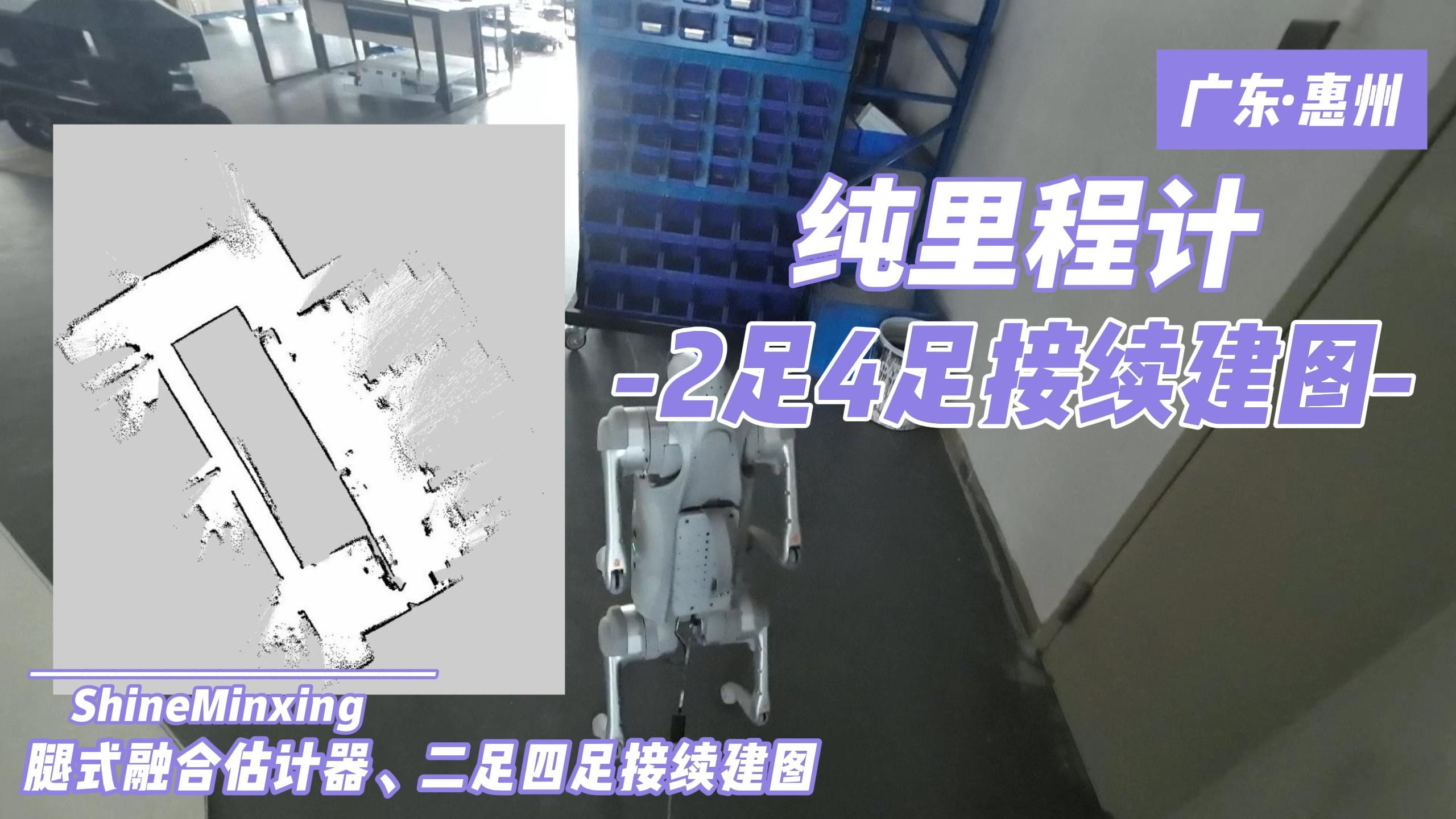 |
| Indoor walking (0.5%–1% error) | 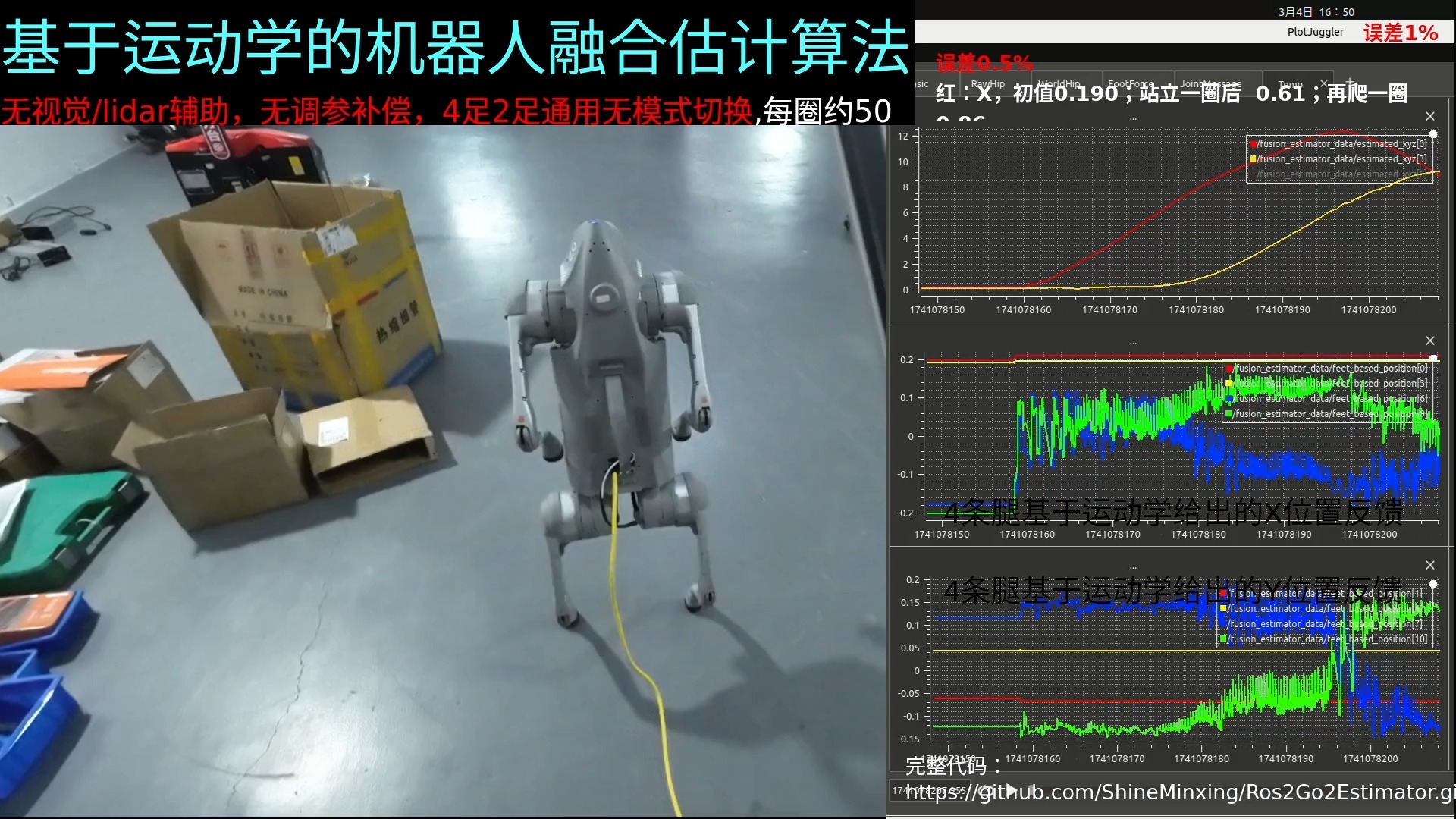 |
| Stair climbing (height error < 5 cm) | 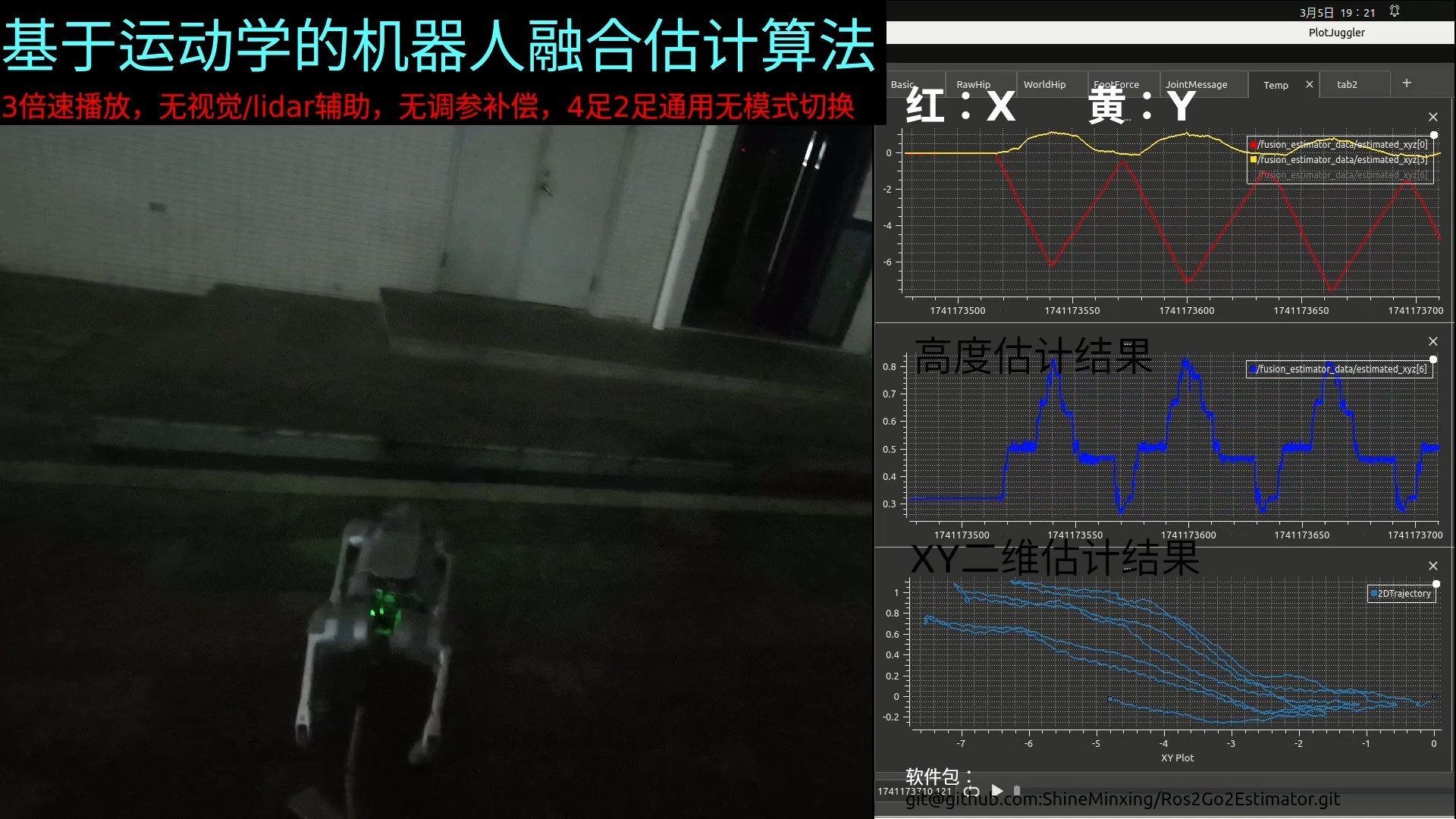 |
| Outdoor walking (380 m, 3.3% error) | 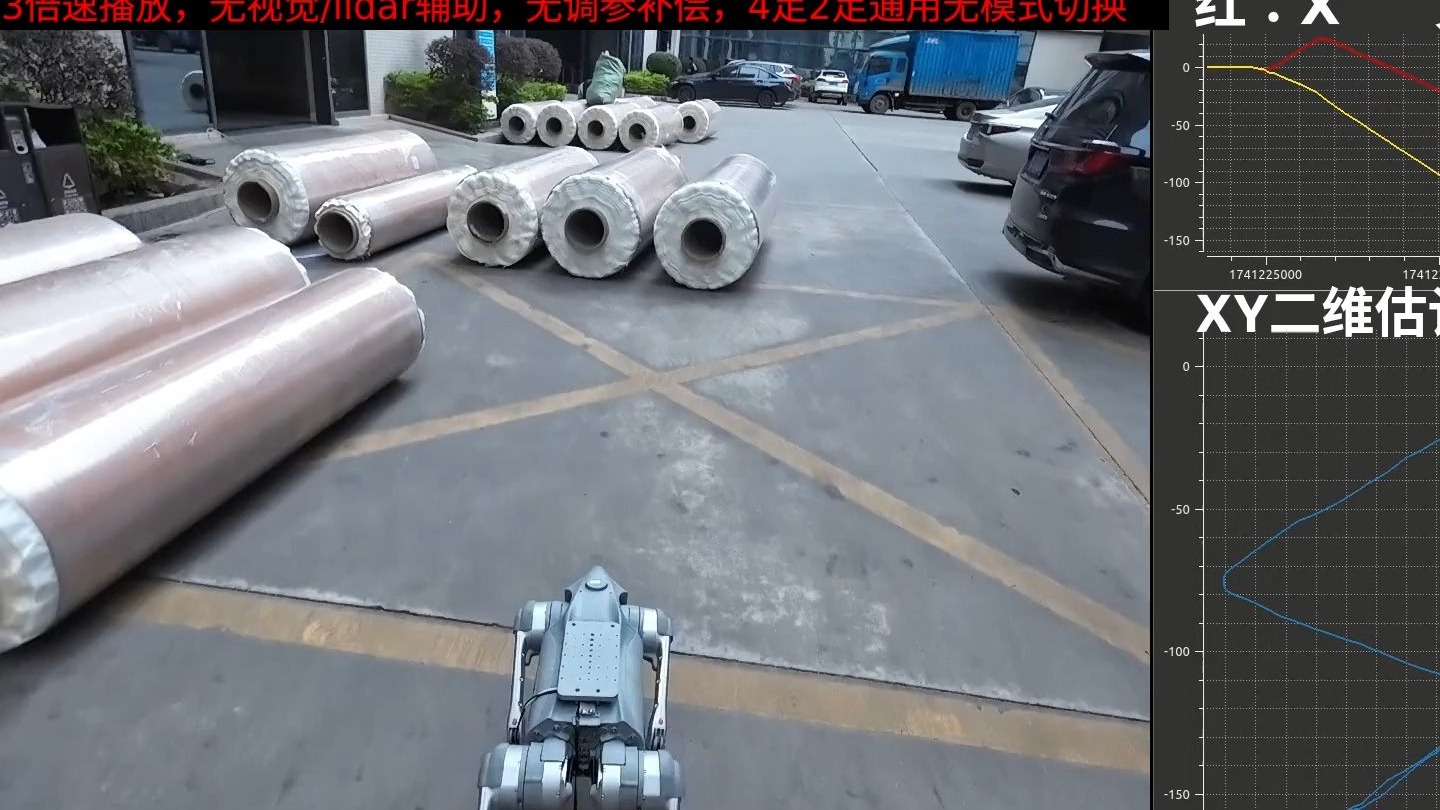 |
| Voice interaction + navigation | 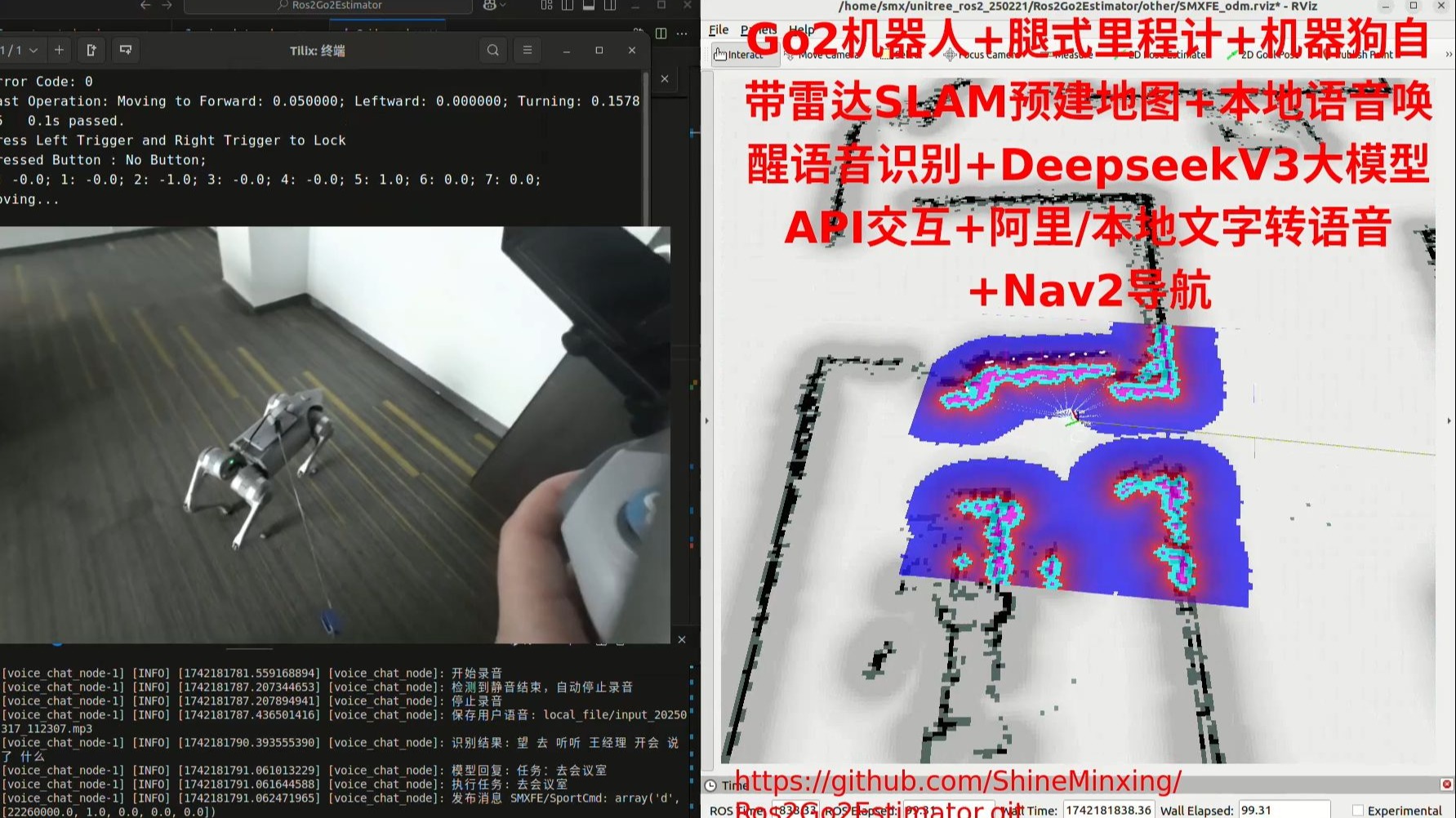 |
| Face tracking + laser spot tracking | 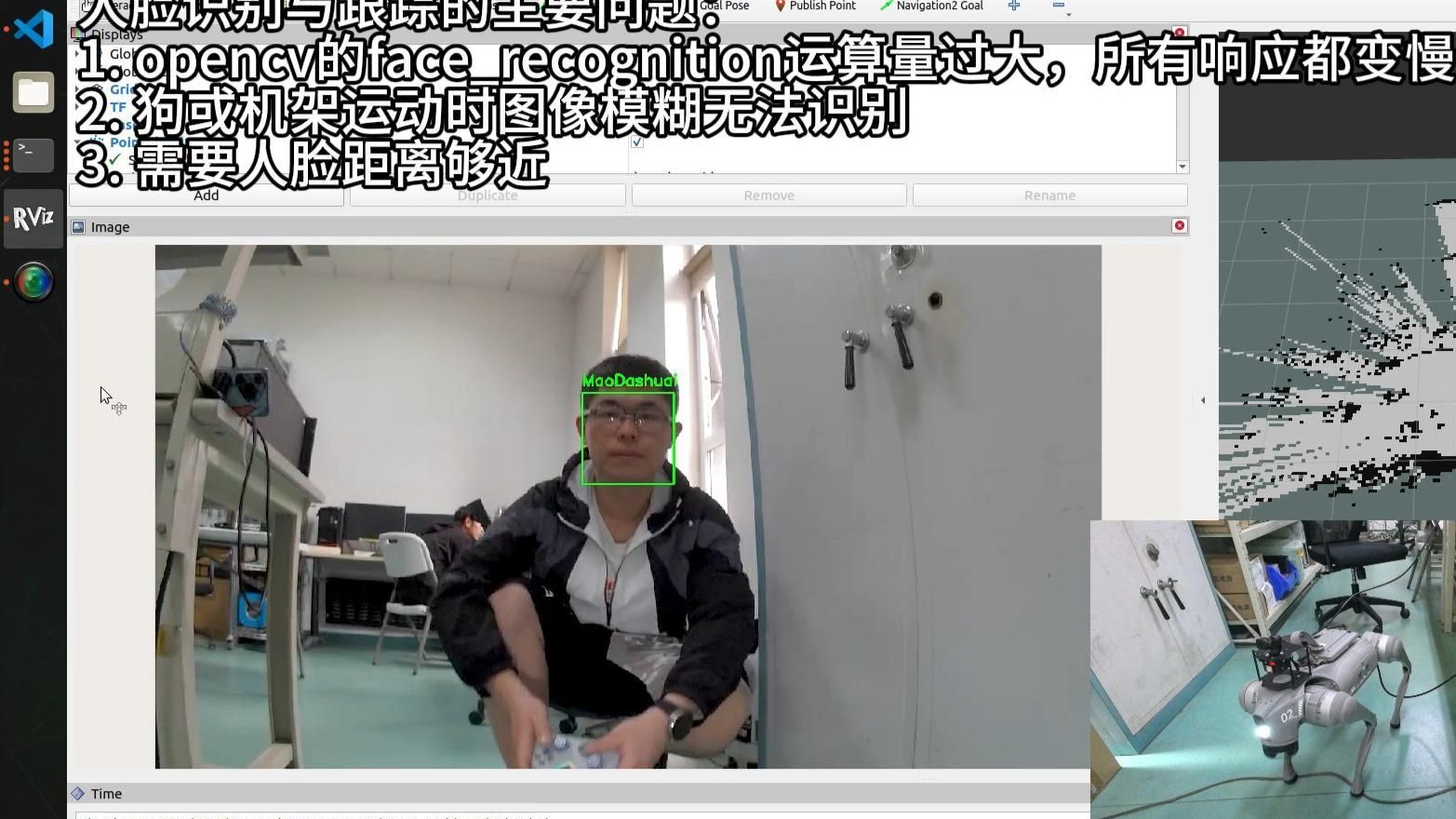 |
| AR glasses head-following | 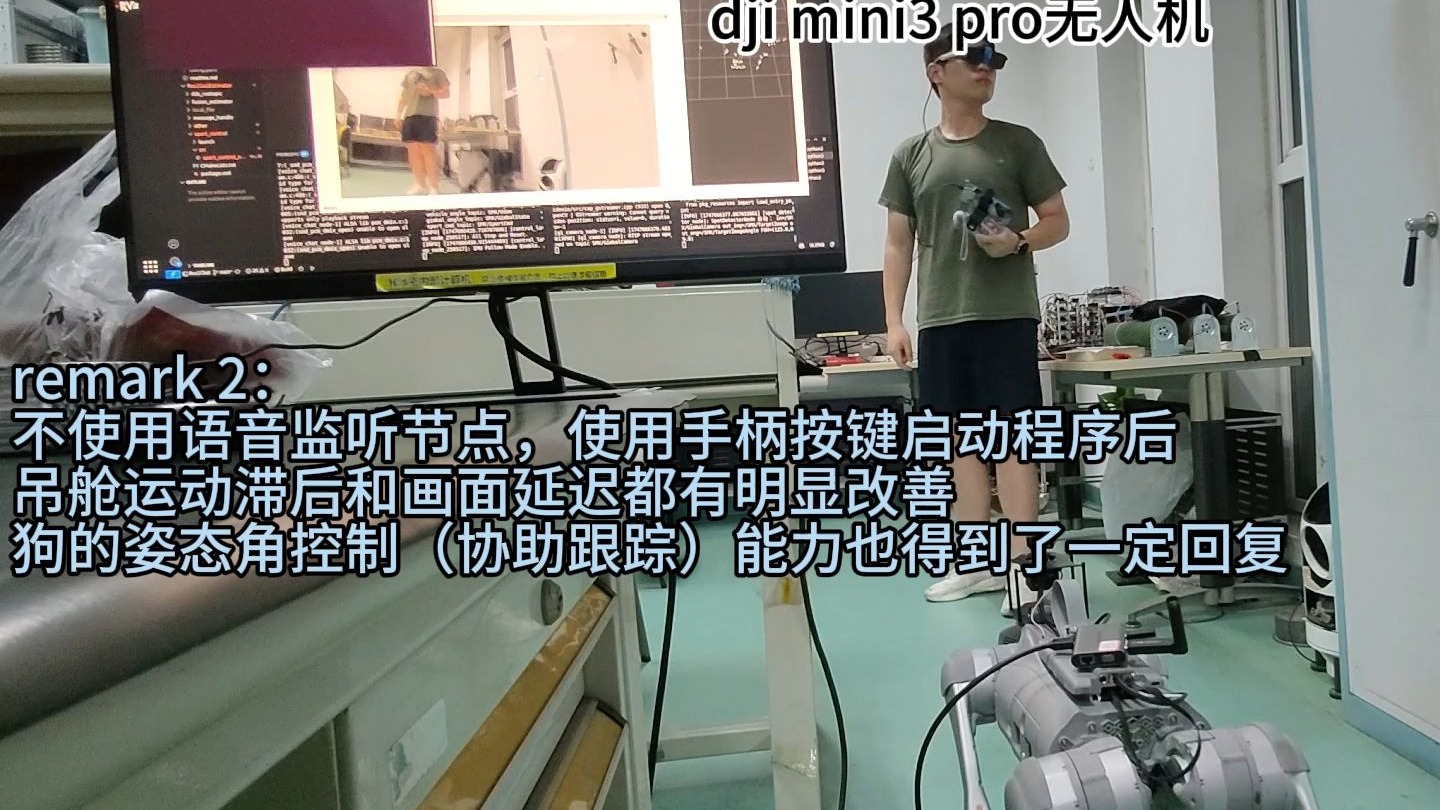 |
| YOLO drone tracking | 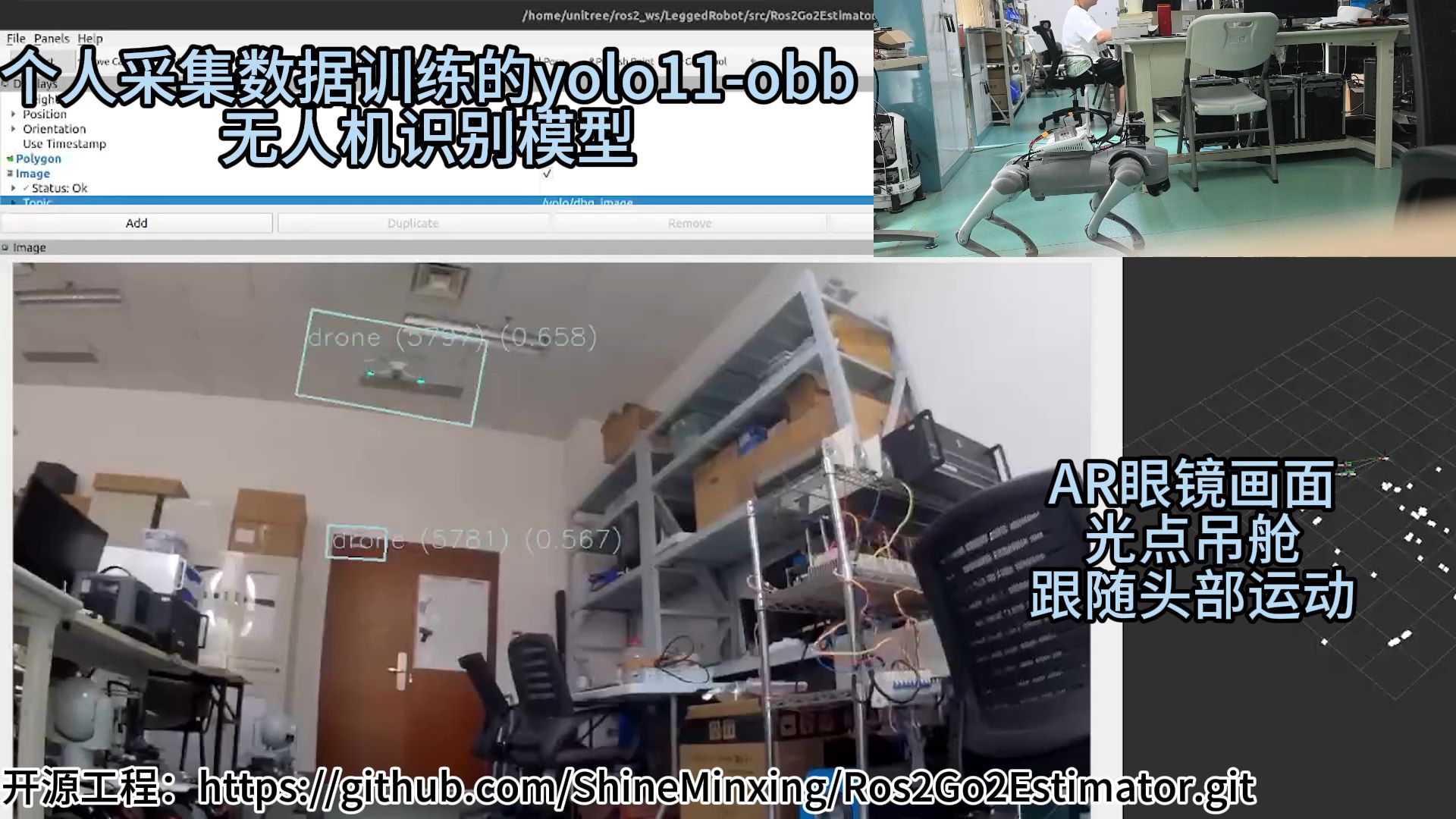 |
| Gimbal + fixed camera collaboration | 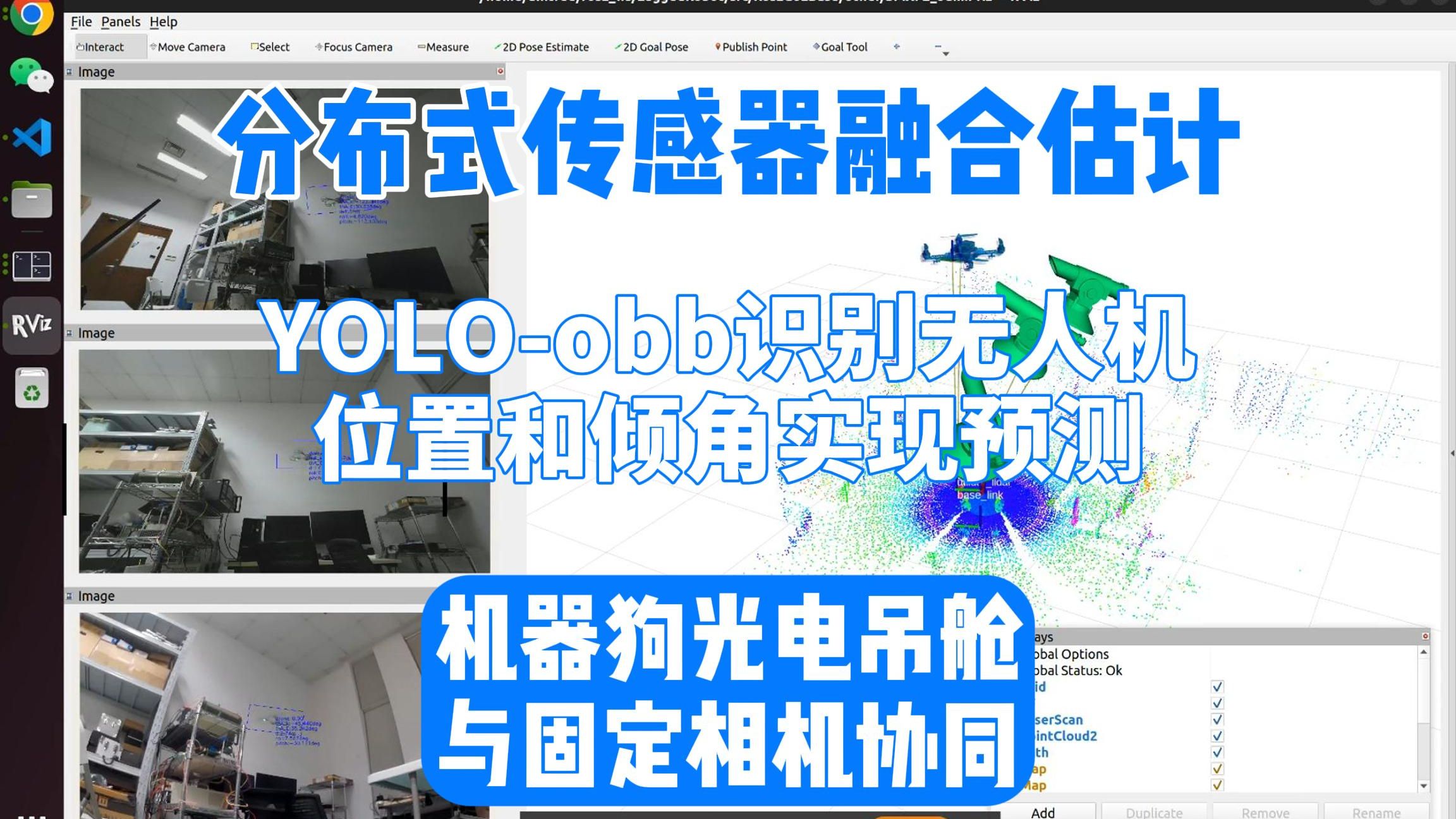 |
| Multiple SLAM integrations | 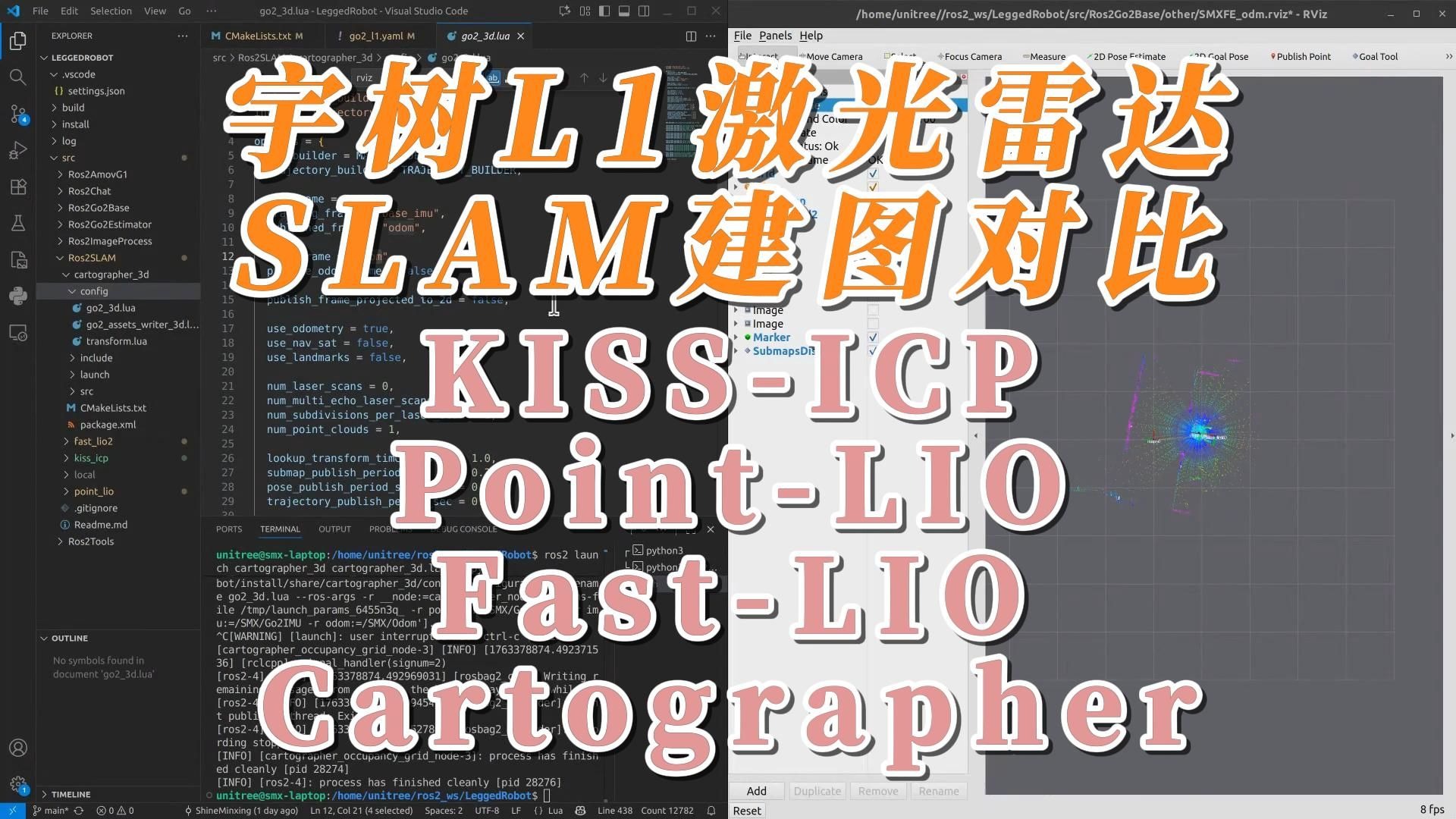 |
| Affiliation | |
|---|---|
| sunminxing20@mails.ucas.ac.cn | Institute of Optics and Electronics, CAS |
This repository is under active development. Issues and PRs are welcome.