bioGen-EMS 2.0 is an open-source, programmable four-channel Electrical Muscle Stimulation (EMS) toolkit for HCI research, rehabilitation experiments, interactive installations, and body-actuating games.
It builds on bioGen-EMS and works with Auto-Paizo using a shared single-character control protocol over USB serial and BLE.
- Features
- Circuit
- Repository layout
- Quick start
- Documentation
- Hardware requirements
- Safety
- Contributing
- License
- Four-channel relay control via demultiplexer select lines (D1–D4)
- Auto-Paizo compatible commands (
A/a…D/d,E/e,r) on serial and BLE - EMG telemetry over BLE (Grove EMG on A0)
- Production firmware for Seeed XIAO nRF52840
- Python CLI for bench testing without Unity
- Open-source hardware CAD, circuit, and firmware (MIT)
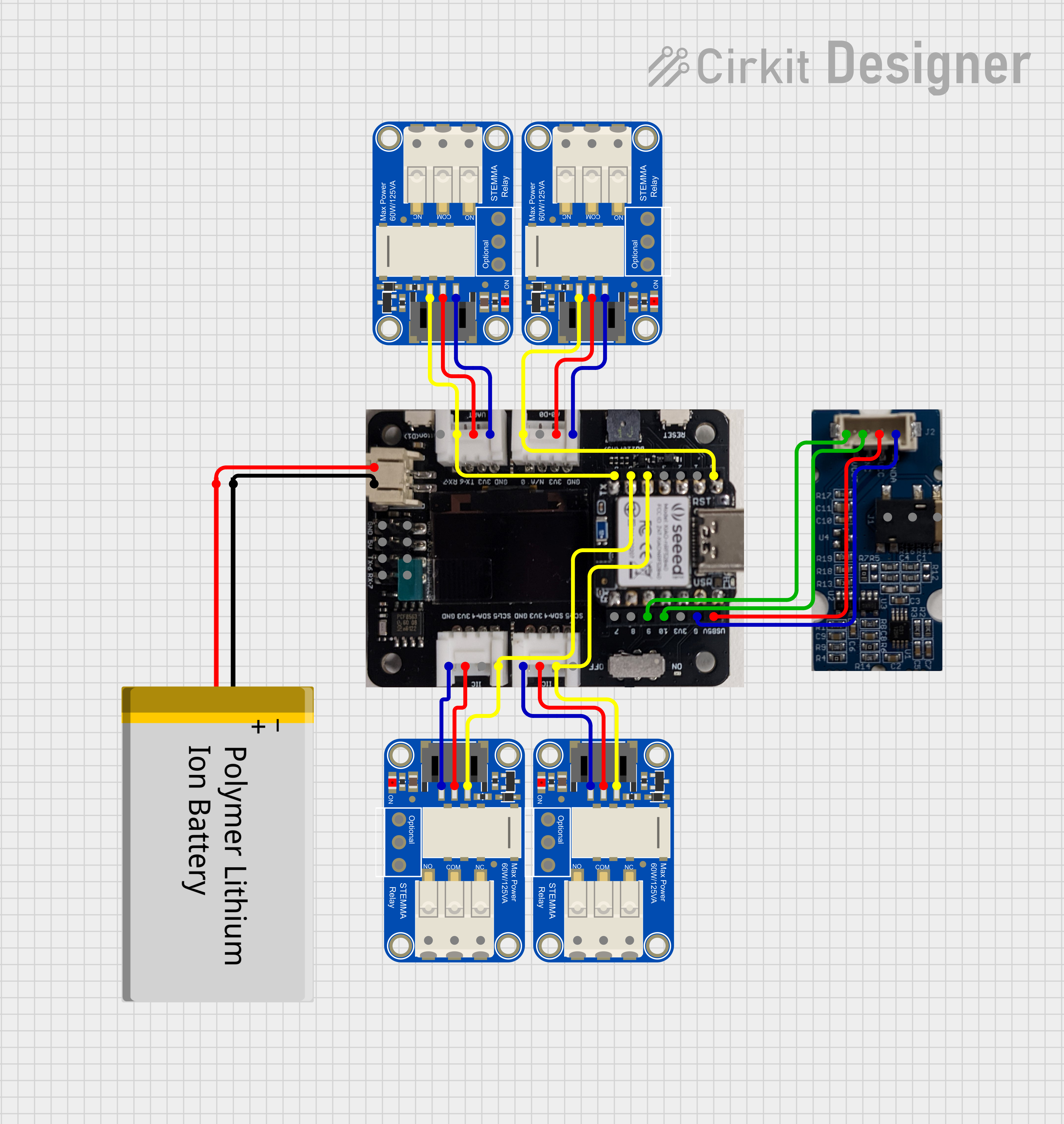
Schematic: Circuit Designs/bioGen-EMS-2.0.ckt (open in Cirkit Studio)
bioGen-EMS-2.0/
├── firmware/biogen_ems/    # Production sketch (Seeed XIAO nRF52840)
├── python/                 # Serial control CLI
├── examples/               # Example scripts
├── docs/                   # BOM, assembly, safety, protocol, enclosure
├── hardware/               # Hardware documentation index
├── CAD Files/              # Enclosure V2.0–V2.2 (use V2.2)
├── Circuit Designs/
└── Test Code/              # Legacy bring-up sketches (deprecated)
git clone https://github.com/Integrated-Motor-Play/bioGen-EMS-2.0.git
cd bioGen-EMS-2.0
pip install -r python/requirements.txt- Install the Seeed nRF52 board package in Arduino IDE.
- Install the ArduinoBLE library from Library Manager.
- Open
firmware/biogen_ems/biogen_ems.ino. - Select Seeed XIAO nRF52840 and upload.
See firmware/README.md for the smoke-test checklist.
# List available serial ports
python python/ems_control.py --list-ports

# Pulse channel 1 for 500 ms (auto-selects first port if --port omitted)
python python/ems_control.py --port /dev/cu.usbmodem101 --pulse 1 --duration 500

# Turn channel 2 on / off
python python/ems_control.py --port /dev/cu.usbmodem101 --channel 2 --on
python python/ems_control.py --port /dev/cu.usbmodem101 --channel 2 --off

# Reset all channels
python python/ems_control.py --port /dev/cu.usbmodem101 --reset
On Windows, use COM3 (or your port) instead of /dev/cu.usbmodem101.
Example script: examples/basic_stim.py
- Bill of materials
- Assembly guide
- Enclosure V2.2 — laser-cut acrylic + 3D-printed top/base
Pair over BLE and run calibration before participant sessions. See docs/auto-paizo.md.
| Document | Description |
|---|---|
| docs/bom.md | Bill of materials |
| docs/pinout.md | MCU pin mapping |
| docs/protocol.md | Serial and BLE command reference |
| docs/assembly.md | Build order and wiring |
| docs/safety.md | Safety and ethics guidelines |
| docs/enclosure.md | V2.2 enclosure manufacturing files |
| docs/changelog-hardware.md | Enclosure revision history |
| docs/auto-paizo.md | Unity / Auto-Paizo integration |
| hardware/README.md | Hardware doc index |
| CAD Files/README.md | CAD file index |
| Component | Notes |
|---|---|
| Seeed XIAO nRF52840 | Main controller |
| 4× Adafruit STEMMA Relay (4409) | Per-channel switching |
| 4-channel demux | Select lines on D1–D4 |
| Off-the-shelf EMS/TENS unit | Stimulation source (switched by relays) |
| Grove EMG Detector | Optional; muscle activity on A0 |
| Electrodes and cables | Per EMS unit manufacturer |
EMS affects the human body. Read docs/safety.md before building or running studies. Use ethics approval, informed consent, conservative intensity, and never test on participants without proper calibration and supervision.
- Fork the repository.
- Create a branch:
git checkout -b feature/your-feature - Commit your changes and open a pull request.
MIT — see LICENSE.